
Artificial intelligence is now a foundational tool in agile project management, with generative AI analyzing project data, predicting risks, and recommending optimal actions across both predictive and…
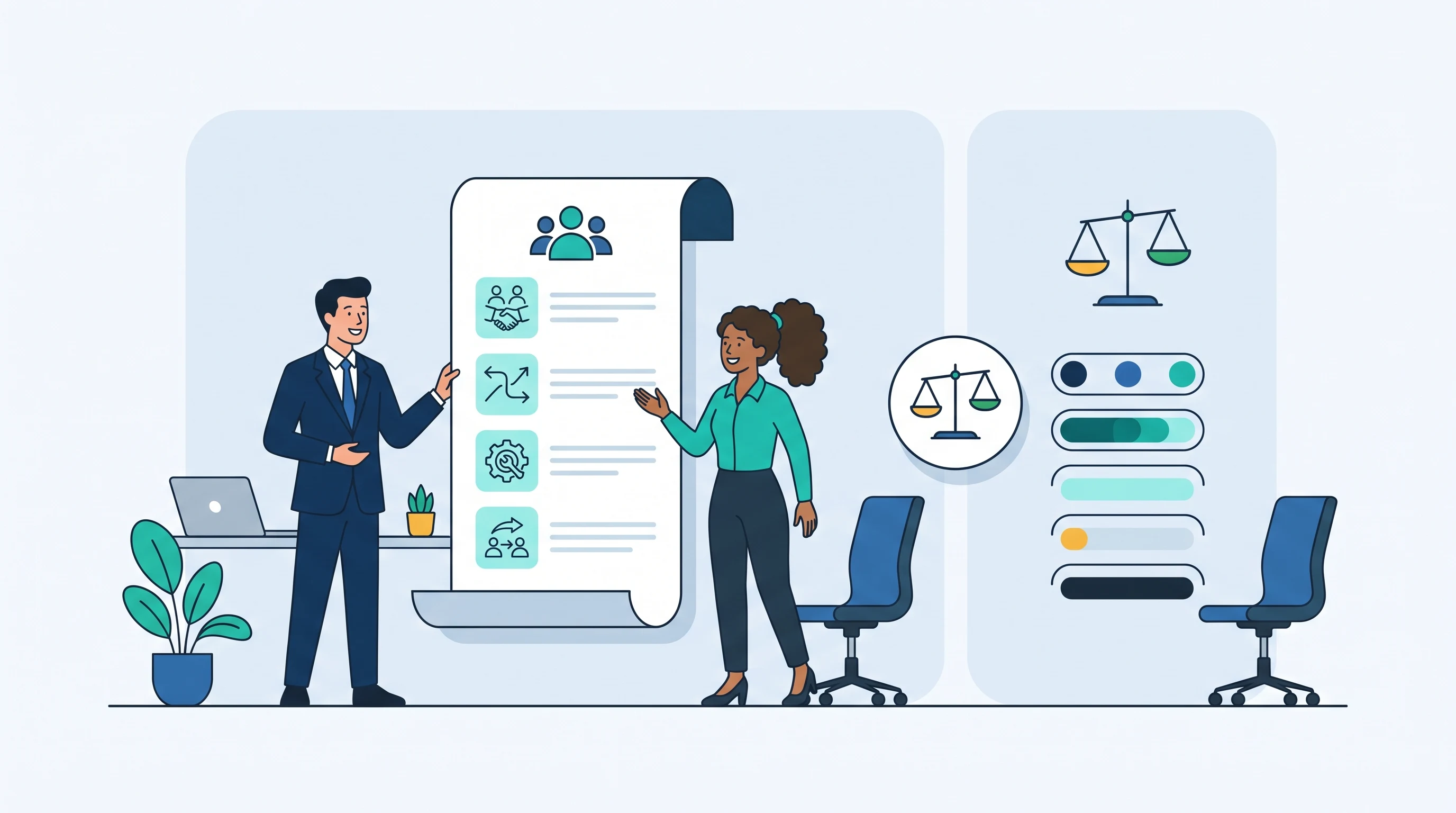
Artificial intelligence is now a foundational tool in agile project management, with generative AI analyzing project data, predicting risks, and recommending optimal actions across both predictive and adaptive life cycles. Organizations that map AI use cases to a structured maturity model—rather than treating adoption as a one-off deployment—gain measurable governance, compliance, and return on investment. The question is no longer whether to use AI, but how to align its capabilities with your team's delivery cadence and maturity level.
In Short
What AI Maturity Means for Agile Project Management
AI maturity in project management is the measured ability of an organization to embed artificial intelligence into its delivery approach—from predictive to adaptive—in a governed, repeatable way. Drawing from the PMBOK Guide's recognition that AI is used in project management alongside agile practices, maturity is not about tool count; it is about alignment between data readiness, team stability, and governance.
The Link to Project Governance and Life Cycles
The PMBOK Guide emphasizes that project life cycles vary in delivery cadence and development approach. AI maturity demands that these approaches be tailored to dynamic conditions. A mature organization does not bolt AI onto a chaotic process; it first ensures foundational elements—project governance, sponsor accountability, and method ownership—are in place. This mirrors the PRINCE2 insight that a method cannot run itself: someone with resources must manage its ongoing development.
From P3M3 Assessment to Consolidated Methods
The PRINCE2 context illustrates the starting point for many organizations: a P3M3 maturity assessment. A low maturity score often reflects fragmented methods—one infrastructure company replaced eight separate methods with a single PRINCE2-based standard after assessment. Similarly, AI maturity requires consolidating data standards and workflow rules before algorithms can generate reliable predictions.
How AI Integrates with Agile and Traditional Frameworks
AI usage differs across frameworks, but the principle remains constant: AI augments human responsibility for fitness for use and ROI.
| Framework / Standard | Primary AI Use Case | Governance & Maturity Consideration |
|---|---|---|
| PMBOK / Hybrid | Data analysis, risk prediction, and course-of-action recommendations across project phases | Tailor AI to the life cycle's delivery cadence; ensure it supports Focus Areas without mechanizing decisions |
| SAFe (Scaled Agile) | Feature/capability sizing, cross-ART dependency mapping, and Program Increment forecasting | Business owners retain governance, compliance, and ROI accountability; AI is a stakeholder input, not a decision owner |
| PRINCE2 / P3M3 | Maturity-led consolidation of project data; standardizing reporting for AI readiness | A sponsor must own method evolution; maturity assessment precedes AI scaling |
| Team-level Agile | Iteration diagnostics and continuous delivery analytics | Team stability is prerequisite; churn prevents both agile accomplishment and reliable AI training data |
In SAFe, a capability spans multiple Agile Release Trains and is split into features for implementation within a single Program Increment. AI can assist in sizing and dependency detection, but business and technical owners remain responsible for governance and fitness for use. Communities of Practice can steward prompt libraries and data-quality standards, ensuring AI outputs align with domain norms.
The "Project Construct" vs. Continuous Delivery
As noted in agile requirements literature, software grows continuously; the traditional "project construct" of a one-off build does not fit. AI maturity must therefore be measured in product or value-stream terms, not rigid project boundaries. Models trained on continuous flow yield better predictions than those fed by static project charters.
How to Assess and Advance Your AI Maturity in Agile Delivery
Key Takeaways
Frequently Asked Questions
How is AI used in agile project management according to major standards?
The PMBOK Guide recognizes that AI is used in project management to analyze data, predict risks, and recommend optimal courses of action. When paired with agile practices, these capabilities help teams tailor strategies to dynamic conditions rather than replacing human judgment.What does AI maturity mean in a project management context?
AI maturity is the organization's ability to embed AI into its governance and delivery methods in a repeatable, sponsor-backed way. It parallels maturity models like P3M3, where a low score signals the need to consolidate disparate methods before scaling advanced tools.Can AI replace project governance in scaled agile frameworks?
No. In frameworks like SAFe, business and technical owners retain responsibility for governance, compliance, and ROI. AI acts as an advanced tool and stakeholder input, but fitness-for-use decisions remain human.Why is team stability important for AI-powered agile teams?
If team members rotate too frequently, the team cannot accomplish iteration goals, and the historical data used to train AI models becomes inconsistent. Stable teams produce both better agile flow and cleaner predictive signals.Should we implement AI before or after a maturity assessment?
After. A maturity assessment reveals method fragmentation and data-quality gaps. Organizations should unify their project management approach and assign method ownership first—just as a PRINCE2-led organization would consolidate eight methods into one before expecting systematic improvement.How does continuous delivery change AI maturity measurement?
Because software grows continuously rather than as a one-off project, AI maturity should be measured across value streams or products, not single projects. Continuous delivery generates the ongoing data required to keep AI models accurate.Conclusion
AI in agile project management delivers the most value when it is grounded in stable teams, consolidated methods, and clear human governance. Start with an honest maturity assessment, align AI to your delivery cadence, and treat it as an augmented capability—not an autonomous replacement for leadership. If you want to know exactly where your organization stands, try MaturaScore's free maturity diagnostic: it assesses your current state and gives you an AI-assisted, human-validated action plan to close the gaps that matter most.