
DevSecOps embeds information security into every stage of the software development lifecycle and continuous delivery pipeline, transforming security from a final gate into a shared, automated responsi…
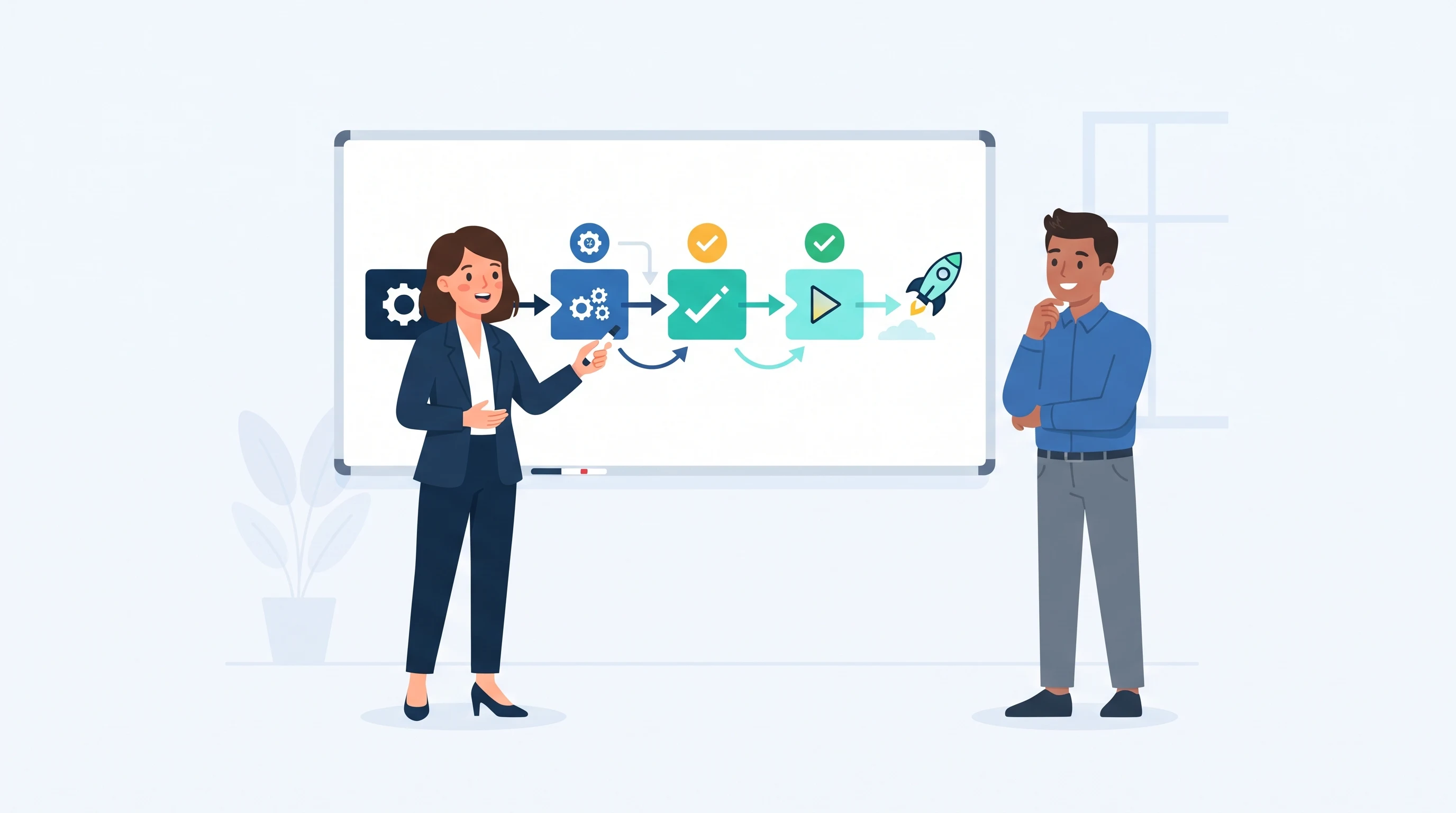
DevSecOps embeds information security into every stage of the software development lifecycle and continuous delivery pipeline, transforming security from a final gate into a shared, automated responsibility. By applying the SAFe CALMR approach and integrating Infosec into daily development and operations work, organizations can break down silos, protect the deployment pipeline, and deliver value faster without compromising safety.
In Short
What Is DevSecOps? Defining Security in the Pipeline
DevSecOps is the practice of weaving security controls directly into the flow of software delivery. While traditional models often position Information Security as a separate review layer, DevSecOps requires that Infosec be integrated into all stages of the SDLC—from design and coding through build, test, deployment, and operations. This concept traces its lineage to Rugged DevOps and early work such as Visible Ops Security, and was later articulated by practitioners like Dr. Tapabrata Pal and the Capital One team, who described their integrated processes as DevOpsSec: a set of practices where security is embedded into every phase of development rather than inspected in at the end.
Why the Security Silo Fails
One of the longest-standing objections to DevOps transformation has been that “Information Security and Compliance won’t let us.” When Infosec is organized as a silo outside of Development and Operations, many problems arise: feedback arrives too late, releases stall for manual review, and teams treat compliance as a checkbox rather than a design constraint. As James Wicket, co-creator of the Gauntlt security tool, observed, DevOps emerged in part to enable developer productivity; integrating security into that same automated flow allows security to scale alongside development rather than constricting it.
The CALMR Foundation for Secure Delivery
SAFe’s CALMR approach to DevOps—covering five main aspects of culture, automation, lean flow, measurement, and recovery—provides the architectural backbone for DevSecOps at scale. Within this model, automation is particularly critical: manual processes are the enemy of fast value delivery, high productivity, and safety. Automated pipelines create repeatable environments and processes that are self-documenting and therefore easier to understand, improve, secure, and audit. Additionally, SAFe principles support shifting some operations responsibilities upstream while following development work downstream into deployment, operating, and monitoring the solution in production. This end-to-end visibility ensures that security telemetry is available for rapid detection and recovery.
DevSecOps vs. Traditional Security
| Dimension | Traditional Security (Siloed) | DevSecOps (Pipeline-Integrated) |
|---|---|---|
| Lifecycle Timing | Late-stage audits, pen tests, and release gates | Continuous scanning and policy checks from first commit |
| Team Structure | Centralized InfoSec acts as external gatekeeper | Cross-functional teams share security ownership daily |
| Process Style | Manual checklists and ticket-based reviews | Automated, codified controls embedded in CI/CD |
| Pipeline Protection | Often overlooked; credentials stored ad-hoc | Hardened pipeline with cloud secret management and version-controlled configs |
| Audit & Compliance | Periodic, disruptive evidence gathering | Continuous, self-documenting audit trails from automated runs |
| Feedback Speed | Days to months | Immediate, within the continuous delivery pipeline |
Key Takeaways
Frequently Asked Questions
What is DevSecOps and how is it different from traditional security?
DevSecOps is the practice of integrating information security into every stage of the software development lifecycle and continuous delivery pipeline. Unlike traditional approaches that position Infosec as a separate review gate outside of Development and Operations, DevSecOps makes security a shared, daily responsibility within cross-functional teams.Why do traditional security silos slow down delivery?
When Infosec is organized as a silo outside Development and Operations, feedback arrives late, releases stall for manual approval, and teams accumulate unplanned rework. Integrating security into the automated pipeline eliminates these hand-offs and allows controls to scale with development throughput.What role does automation play in DevSecOps?
Automation replaces manual, error-prone processes with repeatable, self-documenting controls. In the CALMR approach, automation enables the creation of repeatable environments that are easier to understand, improve, secure, and audit, while supporting fast value delivery and high productivity.How do you protect the deployment pipeline itself?
Treat the pipeline as a production system: version-control its definitions, restrict access, embed automated security scanning at each stage, and use cloud-based secret management systems instead of homegrown credential stores. If the pipeline is compromised, every deployment becomes a liability.What does shifting security left mean in a DevOps context?
Shifting left means moving security activities—such as threat modeling, automated scanning, and policy definition—into the earliest design and coding stages. Combined with shifting operations responsibilities upstream, this ensures that security and observability are built in before code reaches production.Conclusion
DevSecOps transforms information security from an external checkpoint into an internal capability for speed and resilience. By embedding Infosec into the continuous delivery pipeline, automating repeatable controls, and dismantling silos, organizations can protect the deployment pipeline while shipping value faster and more safely. To assess where your organization stands today and build a concrete improvement plan, try MaturaScore’s free maturity diagnostic for an AI-assisted, human-validated action plan tailored to your pipeline.