
The **Scrum Master role** is a servant-leadership position dedicated to coaching the team in Scrum, removing impediments, and fostering self-organization within clear goals and boundaries—not managing…
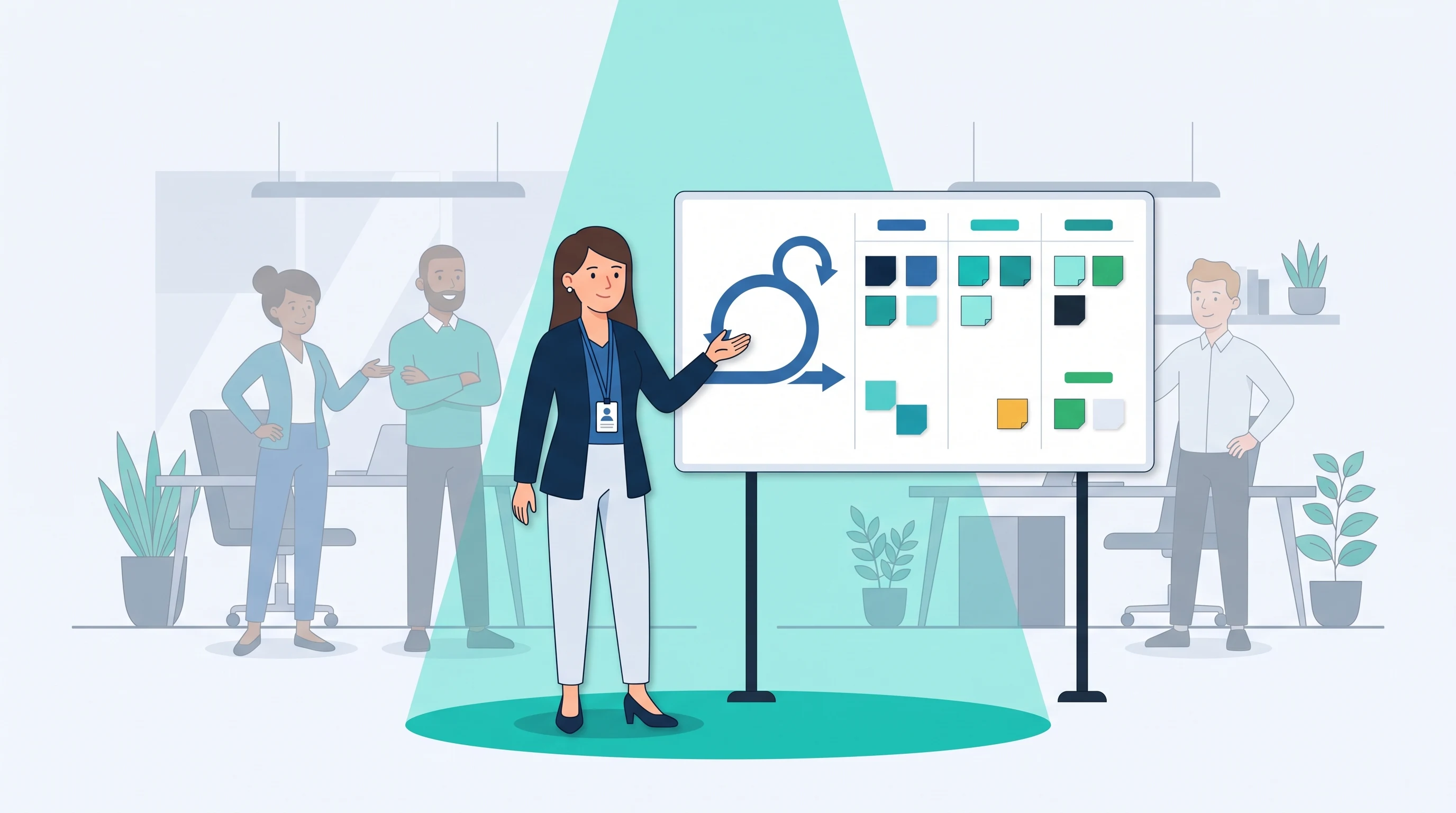
The Scrum Master role is a servant-leadership position dedicated to coaching the team in Scrum, removing impediments, and fostering self-organization within clear goals and boundaries—not managing tasks or coddling developers. When this position collapses into a passive administrator who schedules meetings, takes notes, and shields the team from every discomfort, it becomes the “Scrum Mom” antipattern. High-performing Agile teams need a coach who enforces Scrum values and teaches accountability, not a caretaker who prevents growth.
In Short
What the Scrum Master Role Actually Entails
The Scrum framework defines the Scrum Master as a servant leader and coach whose primary accountability is to the team’s effectiveness and adherence to Agile principles. Rather than directing the work, this role educates the team in Scrum—and, in scaled contexts, in Extreme Programming (XP), Kanban, and SAFe—ensuring that the agreed Agile process is followed.
Servant Leadership and Coaching
Scrum Masters are servant leaders and coaches for an Agile team. This means they help educate the team, foster an environment for high-performing team dynamics, and promote continuous flow and relentless improvement. Their authority is rooted in influence and expertise, not hierarchy. They do not own the product backlog, assign tasks, or dictate how the team should build the product. Instead, they guide the team toward owning its process and continuously improving it.
Guardian of Scrum Values and Self-Organization
A foundational management principle in Scrum is self-organization: teams organize and manage their work autonomously within given goals and set boundaries. The Scrum Master protects this autonomy by reinforcing the five Scrum values—focus, commitment, respect, openness, and courage—that underpin effective collaboration. When a team internalizes these values, it can inspect and adapt without micromanagement. The Scrum Master ensures that boundaries are respected, but never replaces the team’s decision-making authority.
Tracking Progress and Removing Impediments
During any iteration, the Scrum Master plays a vital role in tracking progress and maintaining momentum. Responsibilities include:
The team holds a Daily Stand-up (DSU) to coordinate its work, and the Scrum Master ensures this event remains a synchronization meeting for the team—not a status report to management.
The "Scrum Mom" Antipattern: When Coaching Becomes Caretaking
The term “Scrum Mom” describes a well-known antipattern in which the Scrum Master acts as a team caretaker rather than a coach. Instead of teaching the team to own their process, the “Scrum Mom” books all meetings, takes minutes, brings treats, and shields developers from every external pressure. While often well-intentioned, this behavior directly undermines self-organization, the crucial Scrum principle that teams must manage their work autonomously.
Symptoms of the Scrum Mom
Key warning signs include:
Why It Damages Agility
When the Scrum Master does the organizing, the team stops self-organizing. Autonomy erodes, continuous improvement stalls because discomfort is hidden rather than addressed, and the team never learns to communicate risks directly to stakeholders. The result is a dependent group that performs well in a bubble but struggles to sustain flow under real organizational pressure.
| Dimension | Effective Scrum Master | "Scrum Mom" Antipattern |
|---|---|---|
| Mindset | Servant leader and coach | Caretaker and administrator |
| Autonomy | Fosters self-organization within goals and boundaries | Removes accountability by doing the team’s work |
| Impediments | Coaches the team to identify and remove blockers | Removes blockers silently before the team encounters them |
| Facilitation | Enables team-led events; transfers ownership | Runs events as a permanent master of ceremonies |
| Risk & transparency | Encourages the team to sound an alarm and communicate upward | Hides bad news to protect the team from pressure |
| Value focus | Reinforces focus, commitment, respect, openness, courage | Prioritizes comfort and logistics over growth |
Moving beyond the Scrum Mom stereotype requires deliberate behavioral shifts that return accountability to the team while elevating the Scrum Master to a strategic coaching function.
Key Takeaways
Frequently Asked Questions
What is a "Scrum Mom" in Agile?
A "Scrum Mom" is an antipattern where the Scrum Master acts as a caretaker—handling all logistics, note-taking, and stakeholder shielding for the team—rather than coaching the team to self-organize and own their process. This behavior prevents the autonomy and accountability required by Scrum.
Is the Scrum Master a manager or project manager?
No. The Scrum Master is a servant leader and coach for the Agile team. Unlike a traditional project manager who directs tasks and owns delivery, the Scrum Master educates the team in Scrum, fosters self-organization, and helps remove impediments while ensuring the agreed Agile process is followed.
What are the core responsibilities of a Scrum Master during a Sprint?
During a Sprint—a timeboxed iteration of one month or less—the Scrum Master facilitates team events, fosters backlog refinement, encourages the team to sound an alarm when Sprint Goals are at risk, communicates to and from the Scrum of Scrums and PO Sync, ensures defects are not pushed to the next iteration, and supports deployment and release activities.
How does a Scrum Master differ from a Product Owner?
The Product Owner is accountable for maximizing product value and managing the product backlog, while the Scrum Master is accountable for the team’s process effectiveness and adherence to Scrum. One serves the market and the customer; the other serves the team’s ability to deliver sustainably.
Can the Scrum Master role exist outside strict Scrum?
Yes. Many Agile teams use an Agile Master or team lead who fulfills a similar coaching role even if the team does not apply Scrum per se. The core responsibilities—coaching, impediment removal, fostering high performance, and guarding team health—translate across Agile methods.
Which Scrum values must a Scrum Master protect?
A Scrum Master reinforces the five Scrum values: focus, commitment, respect, openness, and courage. These principles underpin self-organization and create the trust necessary for teams to inspect, adapt, and improve relentlessly.
Conclusion
The Scrum Master role reaches its full potential only when it transcends caretaking and embraces disciplined coaching. By fostering self-organization, enforcing Scrum values, and coaching the team to solve its own problems, the Scrum Master becomes a catalyst for sustainable high performance—not a crutch. If you are unsure where your Scrum Master practice stands, take MaturaScore’s free maturity diagnostic to assess your current state and receive an AI-assisted, human-validated action plan for improvement.