
User stories are concise, user-centric requirements that agile teams refine using the INVEST criteria, estimate through collaborative relative sizing, and schedule across release and sprint planning t…
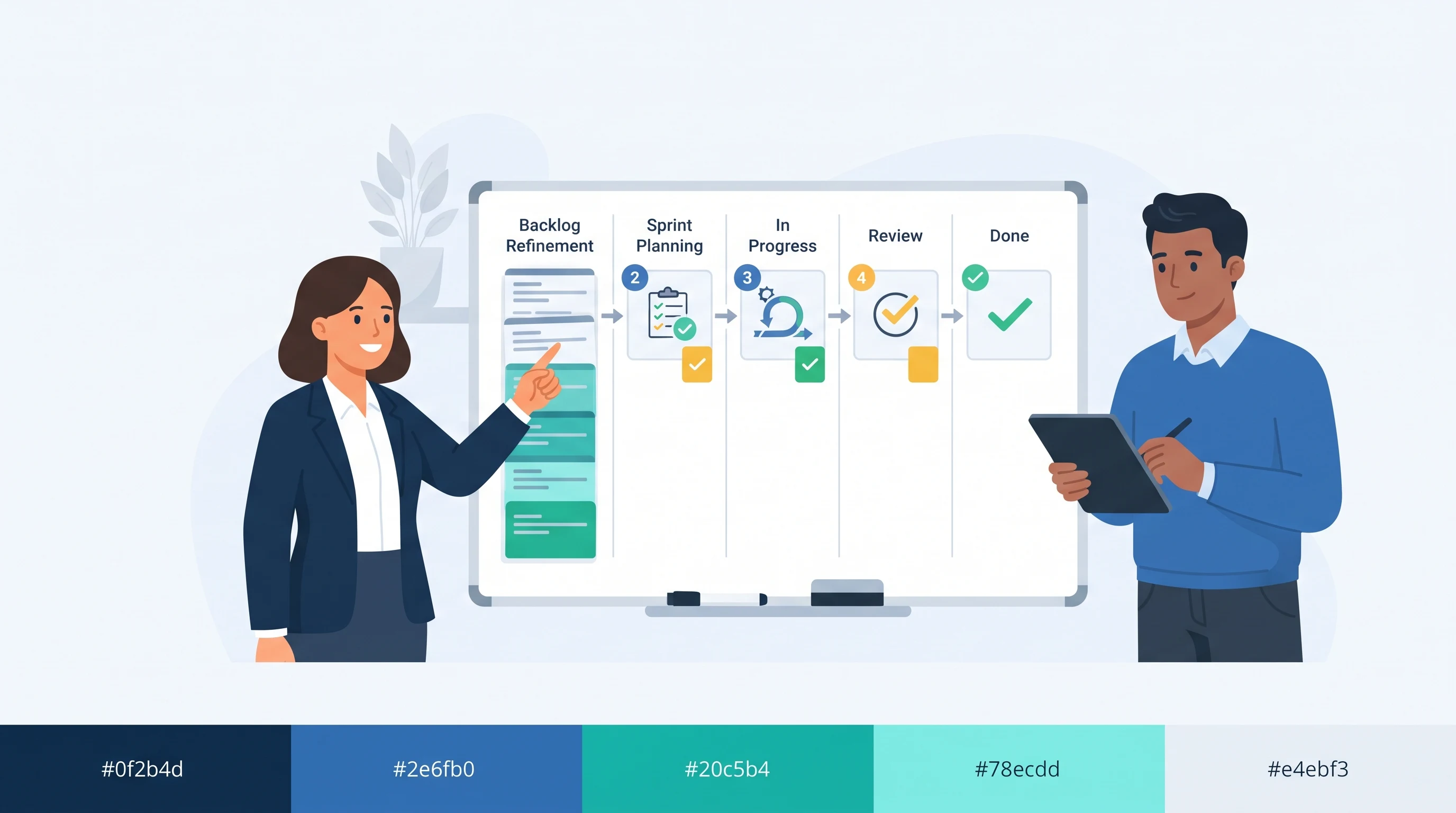
User stories are concise, user-centric requirements that agile teams refine using the INVEST criteria, estimate through collaborative relative sizing, and schedule across release and sprint planning to deliver incremental value. Grounded in the principles of the Agile Manifesto, this approach embraces changing requirements, defers detailed conversations until just before implementation, and replaces heavyweight specifications with emergent, testable commitments.
In Short
What Are User Stories and Why They Replace Heavy Specifications
A user story is a short, simple description of a feature told from the perspective of the person who wants it. Unlike traditional software requirements documents that attempt to freeze specifications early, user stories acknowledge that there are different sizes of requirements, that requirements may change over time, and that it takes skill to find the requirements in the first place.
They shift the focus from documenting features to enabling a conversation. Each story acts as a placeholder for a future discussion between the team and stakeholders. This aligns with the agile belief that we may iteratively refine a system. Rather than defining every field and behavior months in advance, teams use stories to capture intent and defer the specifics until shortly before the developers are ready to add support for the story to the program. Sometimes deferring these conversations causes the developers to slightly rework existing parts of an application, but the belief is that the cost of these slight reworkings is more than justified by the savings in not holding requirements discussions too early.
The INVEST Criteria: Turning Ideas into Ready Stories
The INVEST checklist, drawn from the work of Mike Cohn and the broader agile community, defines what makes a user story ready for estimation and sprint inclusion:
Applying INVEST prevents a backlog from filling with ambiguous tasks that cannot be pulled into a sprint.
Agile Estimation and Relative Sizing
Agile estimation does not chase precision in hours. Instead, teams estimate user stories through relative sizing—comparing a story against other stories to judge whether it is larger, smaller, or roughly equivalent in effort and complexity.
This works because agile processes explicitly recognize that there are different sizes of requirements. A team might use story points on a Fibonacci-like scale or simply sort stories into buckets such as small, medium, and large. Planning poker is a common facilitation technique in which developers reveal their estimates simultaneously, discuss discrepancies, and converge on a shared understanding. Estimates are revisited as the team learns more; because requirements may change over time, yesterday’s estimate is a guide, not a guarantee.
The goal is not to predict the future. It is to give the product owner and team enough information to make informed trade-offs about scope, sequencing, and capacity.
Agile Planning: Release Roadmaps and Sprint Commitments
Agile planning operates at two connected horizons. At the broader level, release planning looks across weeks or months to map major outcomes and approximate scope. At the tactical level, sprint planning defines the immediate increment the team will build.
As Cohn notes in Agile Estimating and Planning, you should start by looking forward to approximately the end of the intended release and write the user stories you can easily see. This creates a candidate backlog that gives stakeholders a realistic forecast without pretending all requirements are already known. Agile processes are supportive of requirements that emerge late in the process, so the backlog is treated as a living artifact.
During sprint planning, the team pulls the highest-priority, INVEST-ready stories from the top of the backlog. Only stories small enough to complete within the sprint and clear enough to start immediately should cross the planning threshold.
| Dimension | Release Planning | Sprint Planning |
|---|---|---|
| Time horizon | Full product or major milestone (weeks to months) | Next iteration (1–4 weeks) |
| Backlog focus | Broad user stories and epics you can easily see | Small, INVEST-ready stories that fit capacity |
| Detail level | High-level acceptance criteria; coarse estimates | Just-in-time task breakdown; refined acceptance criteria |
| Primary goal | Forecast scope and timeline for stakeholders | Define the increment the team will deliver next |
| Change expectation | Welcomes late-emerging requirements | Commits to a stable sprint goal |
Key Takeaways
Frequently Asked Questions
What does INVEST stand for in agile user stories?
INVEST stands for Independent, Negotiable, Valuable, Estimable, Small, and Testable. These six attributes define what makes a user story ready for agile estimation and sprint planning.How do you estimate user stories in Scrum?
Teams estimate user stories using relative sizing techniques such as story points and planning poker. Because agile recognizes different sizes of requirements, estimates compare complexity and effort against other stories rather than predicting absolute hours.When should detailed user story conversations happen?
Detailed conversations should be deferred until shortly before developers are ready to work on the story. This just-in-time approach avoids premature specification waste; while it may require slight rework later, the savings in avoiding early over-analysis justify the cost.What is the best way to discover user stories?
The best results are achieved by combining multiple discovery methods—interviewing users, observing users, questionnaires, and story-writing workshops—rather than overrelying on any single technique.How does agile planning handle late-emerging requirements?
Agile processes are supportive of requirements that emerge late in the process. Teams start by looking to the end of the intended release and writing the stories they can easily see, then iteratively refine and add new stories as understanding grows.Why not document all requirements upfront when using user stories?
Heavy upfront documentation assumes requirements are static, but user stories explicitly acknowledge that requirements may change over time. Iterative refinement and deferred detail reduce the risk of building the wrong feature and lower the cost of change.Conclusion
User stories, INVEST, and agile estimation form a coherent system for delivering value in complex environments where requirements evolve. By planning at the release and sprint levels, deferring detail until the last responsible moment, and discovering needs through diverse collaboration, teams replace rigid specifications with resilient progress. Curious how mature your current agile planning practice is? Take MaturaScore’s free maturity diagnostic to assess where you stand and receive an AI-assisted, human-validated action plan tailored to your context.