
When comparing **Lean vs Six Sigma vs Agile**, the core distinction is simple: Lean eliminates waste and unnecessary steps to create continuous flow, Six Sigma reduces process variation to prevent def…
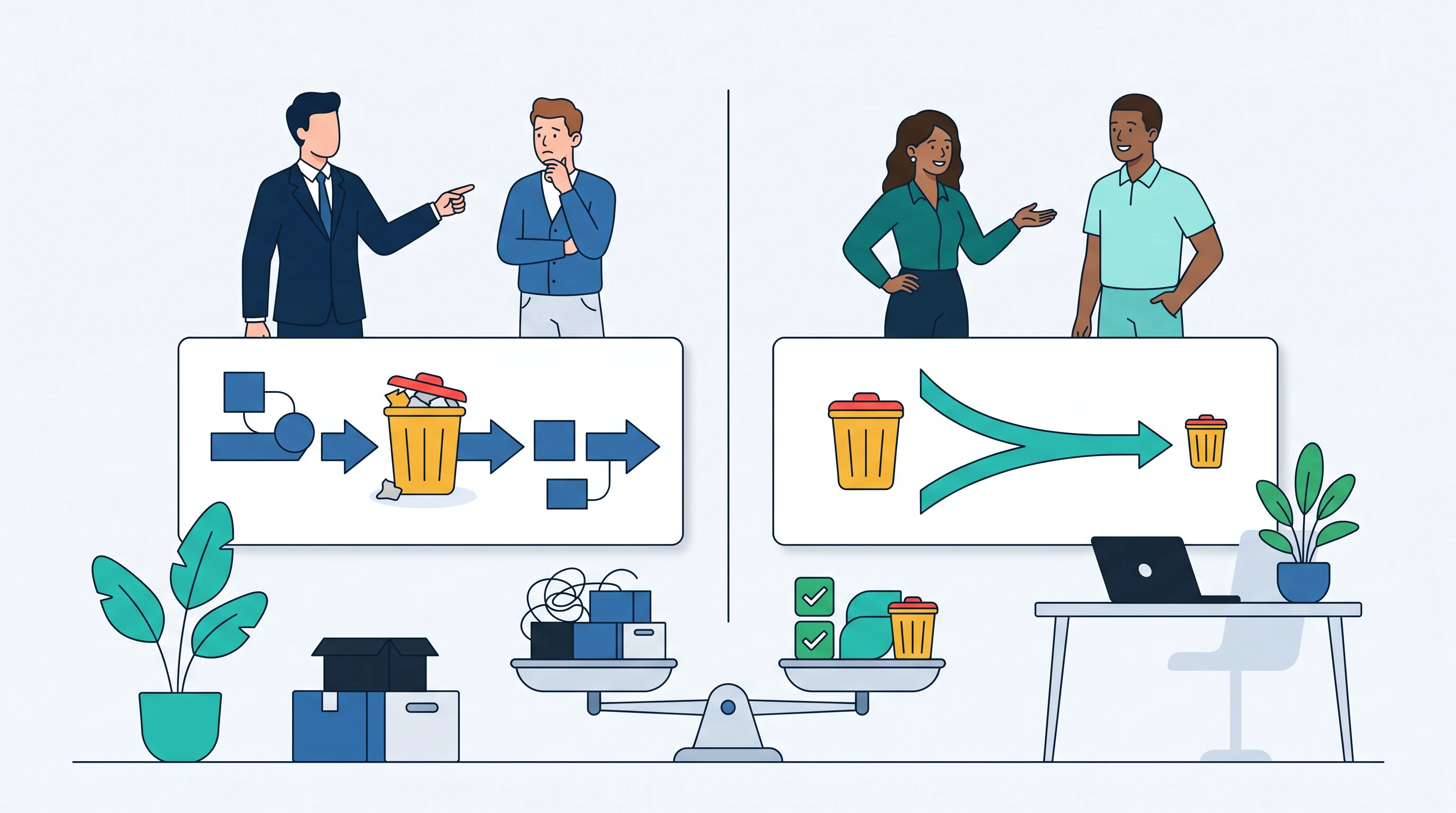
When comparing Lean vs Six Sigma vs Agile, the core distinction is simple: Lean eliminates waste and unnecessary steps to create continuous flow, Six Sigma reduces process variation to prevent defects, and Agile delivers value through incremental, iterative cycles. While Lean provides the foundational principles of value identification, flow, and pull, Six Sigma adds statistical rigor to control variation, and Agile enables teams to adapt quickly to shifting requirements. Organizations frequently integrate Lean and Agile into Lean-Agile practices to achieve early and continuous delivery of value with direct economic benefit.
In Short
What Lean, Six Sigma, and Agile Really Mean
Lean: Cutting Waste and Creating Flow
Lean is built on five core principles: Value Identification, Value Stream Mapping, Flow, Pull, and Perfection. The discipline exists to reduce the number of steps in a process because every unnecessary step is an opportunity for waste to hide. Key tools include Takt Time, Cellular Manufacturing, Continuous Flow, Standardized Work, and Kanban Pull Systems.
In his analysis of the efficiency paradox, Niklas Modig clarifies that Lean is not everything that is good, and everything good is not Lean. Lean is a specific choice at a crossroads—a deliberate position that prioritizes flow and value creation over localized optimization. When applying Lean principles at work, you begin with one person at the core, the exact place where the problem arises. You expand the team only as needed until the problem is resolved, keeping the improvement grounded in reality rather than theory.
Six Sigma: Controlling Variation
Where Lean reduces steps, Six Sigma checks for variation. The central premise is that variation is the enemy of quality; the more variations there are in a process, the more chances there are for waste to accumulate and defects to slip through. While Lean asks, "Which steps do not add value?" Six Sigma asks, "Why does output vary when inputs appear stable?"
By applying statistical discipline to understand and control deviation, Six Sigma isolates root causes that Lean waste-reduction alone might miss. The two frameworks are naturally complementary: Lean trims the fat from a process, and Six Sigma stabilizes what remains.
Agile: Delivering Value Early and Continuously
Agile is an iterative model that shifts organizations away from big-batch releases toward incremental development and early and continuous value delivery. The ability to deliver early and often has a direct economic benefit—it compresses feedback loops, reduces the cost of delay, and allows teams to course-correct based on real user behavior rather than assumptions.
When combined with Lean thinking, organizations form Lean-Agile development models that emphasize flow efficiency alongside rapid iteration. This integration is not accidental; both systems share a DNA of relentless improvement and customer-centricity.
Lean vs Six Sigma vs Agile: Side-by-Side Comparison
| Dimension | Lean | Six Sigma | Agile |
|---|---|---|---|
| Primary Goal | Eliminate waste and create continuous flow | Reduce variation and eliminate defects | Deliver value incrementally and adapt quickly |
| Core Question | What steps do not add value? | Why does output vary from the standard? | How can we deliver working solutions faster? |
| Key Practices | Value Stream Mapping, Kanban, Takt Time, Standardized Work, Continuous Flow | Statistical process control, variation analysis, root-cause investigation | Iterative cycles, early and continuous delivery, feedback loops |
| Typical Use Case | IT operations, service delivery, manufacturing flow | Quality-critical processes, precision operations | Product development, digital transformation |
| View of Waste | Unnecessary steps are waste | Variation creates waste and defect opportunities | Delayed feedback and unused features are waste |
| Team Model | Start with one person at the core; expand as needed | Data-driven project teams analyzing process capability | Small cross-functional teams with daily collaboration |
Key Takeaways
Frequently Asked Questions
Can you use Lean and Six Sigma together?
Yes. Lean reduces the number of steps to cut waste, while Six Sigma checks for variation in the remaining process. Because variation creates opportunities for waste, the two frameworks are naturally complementary and often deployed sequentially.What is the difference between Lean and Agile?
Lean focuses on eliminating waste and creating continuous flow across the entire value stream, while Agile emphasizes iterative delivery and adapting to changing requirements. In practice, they are frequently combined into Lean-Agile development to achieve both flow efficiency and rapid feedback.What is a Lean-Agile Center of Excellence (LACE)?
A LACE is a guiding coalition of leaders and change agents that crafts a clear vision for transformation and fosters relentless improvement. It is a significant differentiator between organizations practicing Lean-Agile in name only and those achieving real, lasting business outcomes.Should I start with Lean or Six Sigma?
Start by identifying your primary constraint. If the process is bloated with non-value-added steps, begin with Lean principles. If the process is streamlined but output is inconsistent and defect-ridden, apply Six Sigma. Many organizations map the value stream with Lean first, then stabilize with Six Sigma.Is Lean only for manufacturing?
No. Lean principles such as Value Stream Mapping, Flow, and Pull apply equally to IT and service environments. Lean IT uses the same concepts—identifying value, reducing steps, and creating flow—to improve digital and service delivery processes.How do you start a Lean improvement initiative?
Begin with one person at the exact place where the problem arises. Use that individual to understand the core issue, then expand the team gradually until the problem is resolved. This core-start approach keeps the improvement grounded in operational reality.Conclusion
Lean, Six Sigma, and Agile each solve a distinct problem—waste, variation, and uncertainty respectively. The most effective organizations treat these frameworks as complementary tools rather than competing religions, often blending Lean flow with Agile iteration under a unified transformation vision. If you are unsure where your organization stands, take MaturaScore's free maturity diagnostic to assess your current state and receive an AI-assisted, human-validated action plan tailored to your specific constraints.